


Rawalpindi Ring Road — Development Update & What It Means for Housing Societies
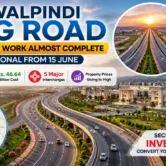
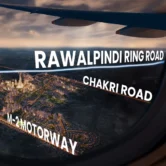
The Rawalpindi Ring Road (RRR) is one of Punjab’s most transformative infrastructure projects in recent years. Designed to create a high-speed, controlled-access loop around Rawalpindi and parts of Islamabad, the Ring Road promises to unclog city traffic, open up fresh land for development and dramatically increase the investment potential of housing projects along its route.
Quick project snapshot
Purpose: Six-lane, controlled-access ring road to divert through-traffic away from Rawalpindi city, connect major motorways and improve regional connectivity.
Route & reported length: Published figures vary because of revisions and segmentation: many reputable press and market reports reference the main constructed section as roughly 38–39 km, while earlier RDA technical documents described a longer alignment (reports up to ~65 km) that included wider planning corridors. This reflects route refinements and phased implementation—readers should note that maps/lengths have been revised as PC-I updates and land acquisition progressed.
Key interchanges / connections: Planned interchanges include Banth, Chak Beli Khan, Adyala, Chakri and Thalian—linking GT Road (N-5), M-2 motorway, and areas near Islamabad International Airport.
Current status & timeline
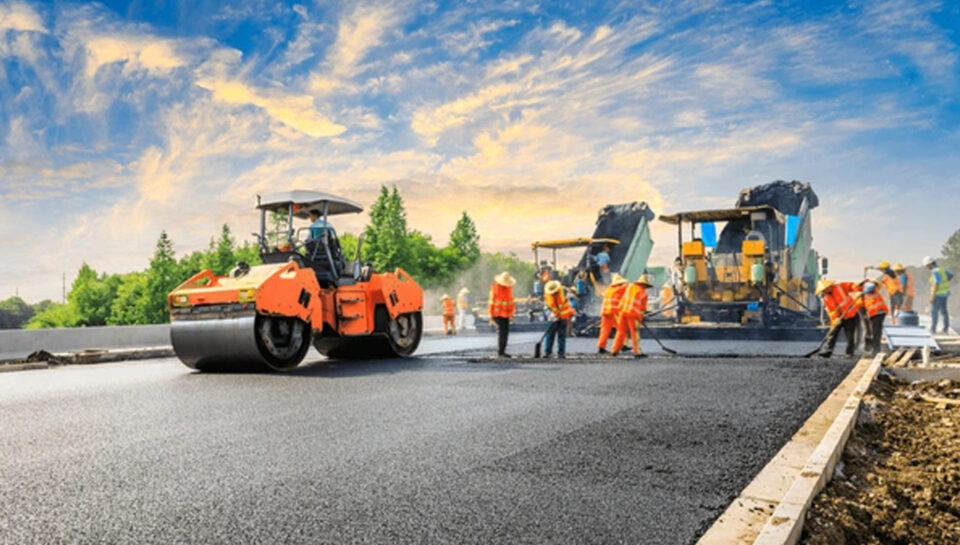
Public updates from provincial authorities and reporting in national outlets indicate substantial progress through 2024–2025. Officials recently stated that roughly 75% (or similar major-work milestones) of on-site construction has been completed, with land acquisition and key structural elements in advanced stages. The Frontier Works Organisation (FWO) is the main contractor and the Rawalpindi Development Authority (RDA) supervises the project through its PMU. Provincial leadership has directed accelerated work with a target to finish the road within the current calendar year (year-end deadline reported).
In short: the project has moved from planning to large-scale construction, and official statements in 2025 indicate a push to complete the main carriageway and interchanges by year-end.
Cost & financing (overview)
Costs and the PC-I have been adjusted during implementation. Media reports cite a revised project cost (significantly higher than early estimates) driven by inflation, additional land acquisition and widening of scope. Official budget and PC-I revisions have been under discussion at provincial level. (Readers seeking precise, up-to-date budget lines should consult recent RDA releases or the PC-I when published.)
Who’s building it?
The Frontier Works Organisation (FWO) is the executing contractor on major sections, supported by RDA’s project management unit; design/consultancy inputs have involved international partners during feasibility and PC-I phases. The RDA and provincial government remain the primary sponsors/oversight bodies.
What the Ring Road means for nearby housing societies and investors
The Rawalpindi Ring Road is a catalyst for urban expansion. Here’s how local housing societies and the real-estate market are expected to benefit:
1. Improved accessibility & drastically reduced travel times
Communities near planned interchanges (Banth, Chak Beli Khan, Adyala, Chakri, Thalian) will enjoy much faster access to motorways and Islamabad International Airport. This connectivity reduces commuting times for residents and makes suburban living practical for working professionals.
2. Substantial uplift in land & property values
Historically, major roadway connections drive up demand for adjacent land. Analysts and real-estate portals predict appreciation for plots and developed properties near the Ring Road due to improved access and speculative buying—benefitting both existing homeowners and early investors in projects like Capital Smart City, Faisal Town / Faisal Hills-adjacent developments, TopCity-1 and other schemes positioned near interchanges.
3. New commercial corridors and economic zones
Provincial policy discussions indicate plans for economic/commercial nodes and possibly industry or logistics zones along the Ring Road, which would create localized employment hubs and attract retail, warehousing and services—raising the livability and investment case of nearby societies.
4. Easier utilities & infrastructure rollout
Large road projects often bring bundled infrastructure upgrades—drainage, electricity corridors, and water/sewer alignments—that make it simpler and cheaper for developers to extend services into new neighbourhoods. This reduces development costs and accelerates delivery of housing blocks.
5. Reduced inner-city congestion & better environmental outcomes
By diverting long-distance/through traffic away from urban arteries, the Ring Road will ease congestion inside Rawalpindi, improve air quality on busy corridors and reduce local travel stress—improvements that directly enhance residential desirability.
Which societies stand to gain most?
Projects closest to the planned interchanges and carriageway corridors are in the best position to benefit. Industry reporting and local market analysis repeatedly call out areas and gated communities near Chakri, Banth, Adyala and Thalian as top beneficiaries — this includes both large master-planned developments (e.g., Capital Smart City and other planned townships) and smaller/newer schemes that were previously distant from major motorways. Buyers looking at societies in those catchment zones typically see the strongest near-term appreciation.
Risks & caveats investors should know
Route revisions & political sensitivity: The Ring Road’s alignment has been the subject of debate and revision in the past; route changes can materially affect which societies benefit most. Always confirm the latest approved PC-I and RDA maps.
Land-acquisition & legal clearances: Some sections required substantial land acquisition and legal work—delays in these processes can impact timelines.
Speculative overheats: Areas near new interchanges sometimes experience rapid price spikes driven by speculation; prudent investors should balance timing, due diligence on developer credentials and infrastructure delivery.
Practical timeline (what to expect in the short term)
2024–early-2025: Large-scale earthworks, bridges and interchange foundations completed on several stretches; land acquisition largely advanced.
2025 (current push): Provincial directives to accelerate completion, with media reporting that ~75% of work is done and officials aiming for a year-end finish for the main carriageway and interchanges. Stakeholders should watch RDA and FWO progress updates for formal completion certificates and opening dates.
Bottom line — why the Ring Road matters
The Rawalpindi Ring Road is more than a road: it’s a structural investment in regional mobility that unlocks land, spurs commercial activity and significantly improves the investment profile of societies along its route. For developers, homeowners and investors, proximity to an interchange and clear title/developer record are the two strongest predictors of future returns. Use official RDA maps and the PC-I as your first reference, watch contractor/FWO progress reports, and verify the exact interchange proximity before committing funds.